

Luxury Replica Watches
A Survey on Mechanical Watch Wearing in Fudongyuan Community
A Survey on Mechanical Watch Wearing in Fudongyuan Community, Qujiang District
I. Survey Background and Methodology
In 2026, as annual smartwatch shipments surpass the ten-million-unit mark, traditional mechanical watches appear to be facing a silent “siege.” Industry reports indicate that China’s watch market has exceeded 100 billion RMB, with smartwatches capturing over 30% market share and growing at an annual rate exceeding 25%. Yet despite this, 45.1% of Chinese adults still regularly wear a watch—and among them, mechanical watches lead all categories with approximately 36% market share.
Against this macro backdrop, this survey takes Fudongyuan Community in Qujiang District, Quzhou City, Zhejiang Province as its sample. The objective is to leverage primary data and industry benchmarks to reveal the actual conditions, consumption motivations, and evolving trends of mechanical watch wearing within a specific residential community.
Methodology: From July to August 2026, questionnaires were distributed to Fudongyuan residents via Wenjuanxing (a Chinese online survey platform), supplemented by in-home interviews. A total of 136 valid responses were collected, with respondents ranging in age from 22 to 68. The sample comprised 89 males (65.4%) and 47 females (34.6%).
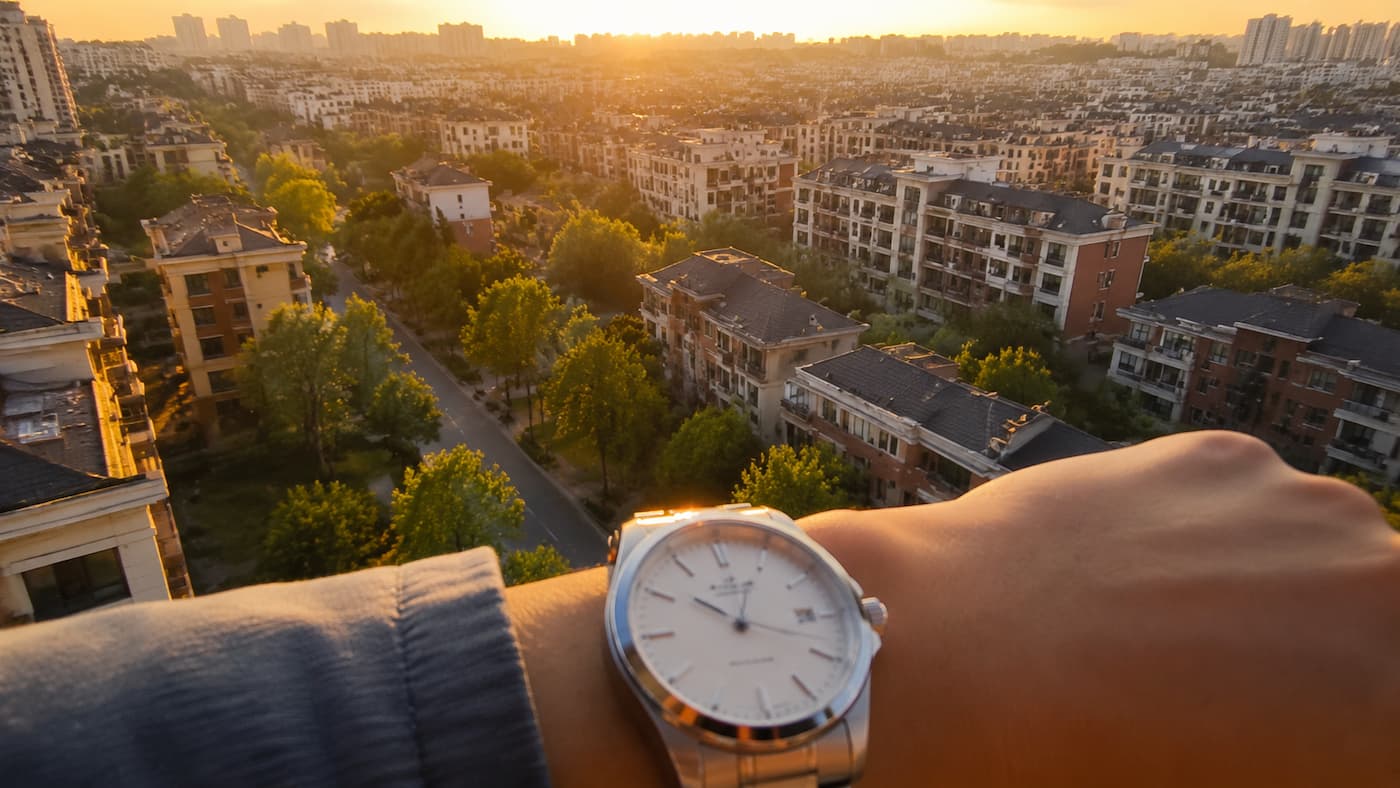
Community Profile: Fudongyuan Community is situated at the intersection of Qiushi Road and Bailing North Road in Qujiang District. Built in 2010, it comprises 43 residential buildings with 1,374 households. The average second-hand home price is approximately 8,441 RMB/m², with the flagship layout being a three-bedroom unit of around 122 m². Residents are predominantly civil servants, teachers, business managers, and retirees—placing the community in the upper-middle tier of established neighborhoods.
II. Wearing Rate and Type Distribution
2.1 Overall Wearing Rate
The survey reveals that 47.8% of respondents (65 individuals) regularly wear a watch, slightly above the national average of 45.1%. The remaining 52.2% (71 individuals) do not wear watches regularly. Given the relatively high proportion of middle-aged and elderly residents in this community—whose wearing habits tend to be more entrenched—this figure falls within the expected range.
2.2 Distribution by Watch Type
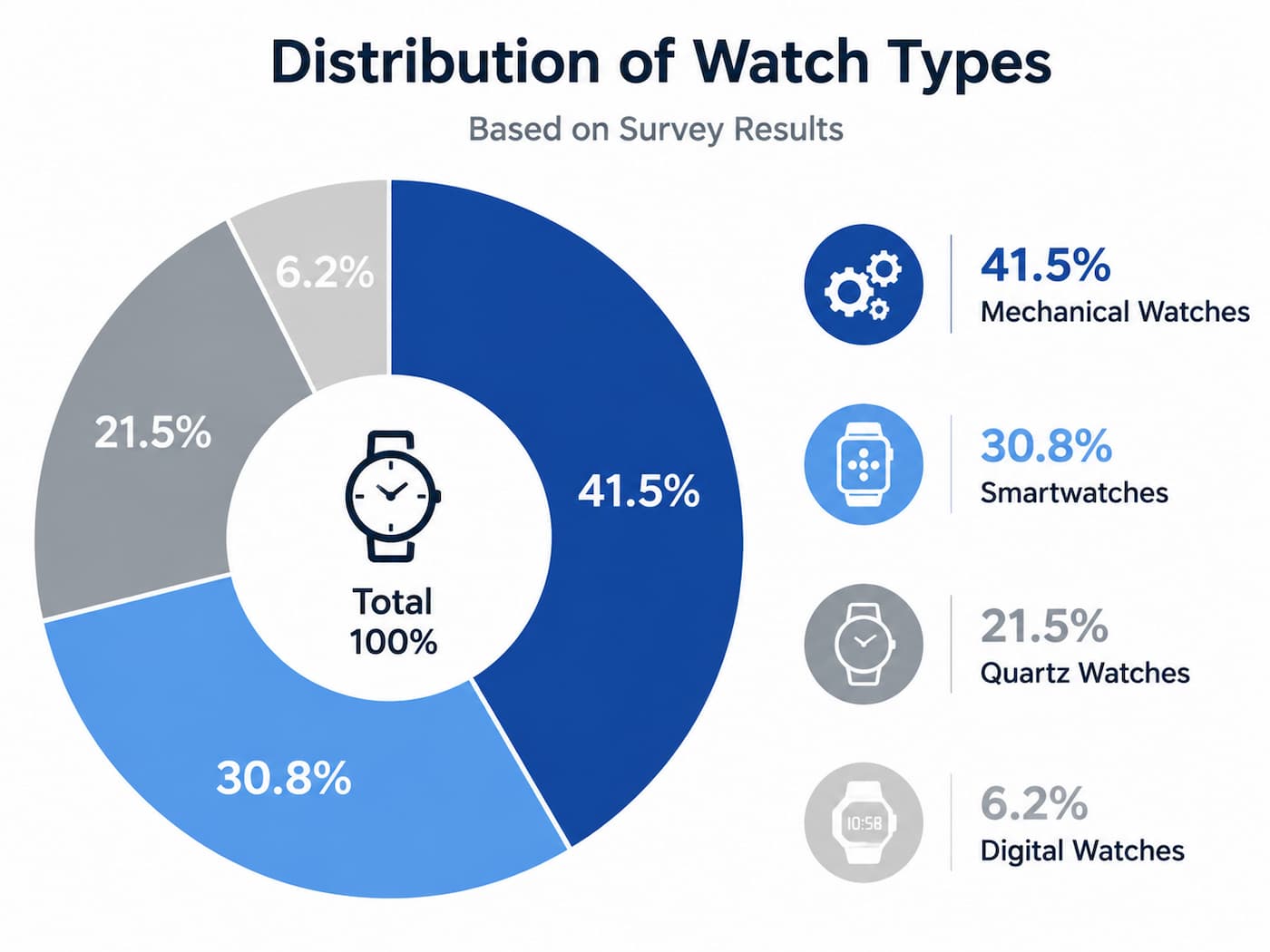
Among the 65 regular watch wearers, the breakdown by type is as follows:
| Watch Type | Count | Proportion | National Market Reference |
|---|---|---|---|
| Mechanical | 27 | 41.5% | ~36%–40% |
| Smartwatch | 20 | 30.8% | ~30%–32% |
| Quartz | 14 | 21.5% | ~27%–35% |
| Digital/Electronic | 4 | 6.2% | ~13% |
📌 Key Observations:
Mechanical watches (41.5%) exceed the national average of approximately 36%, reflecting the community’s pronounced preference for traditional watchmaking craftsmanship. National data further shows that among male consumers who purchase watches for personal use, mechanical watches rank first at 62%—though this figure is elevated because it counts only “those who have made a purchase,” rather than all wearers.
Smartwatches (30.8%) align closely with the national market share of roughly 30%. Notably, Quzhou City recorded a 470.1% year-on-year surge in retail sales of wearable smart devices from January to April 2024, indicating that smart wearables are rapidly penetrating the local market.
Quartz watches (21.5%) register slightly below the national level. One possible explanation is that among middle-aged and older consumers, quartz watches are sometimes perceived as a compromise lacking “substance” compared to mechanical alternatives.
III. Wearing Motivations and Consumption Behavior
3.1 Core Motivation Analysis
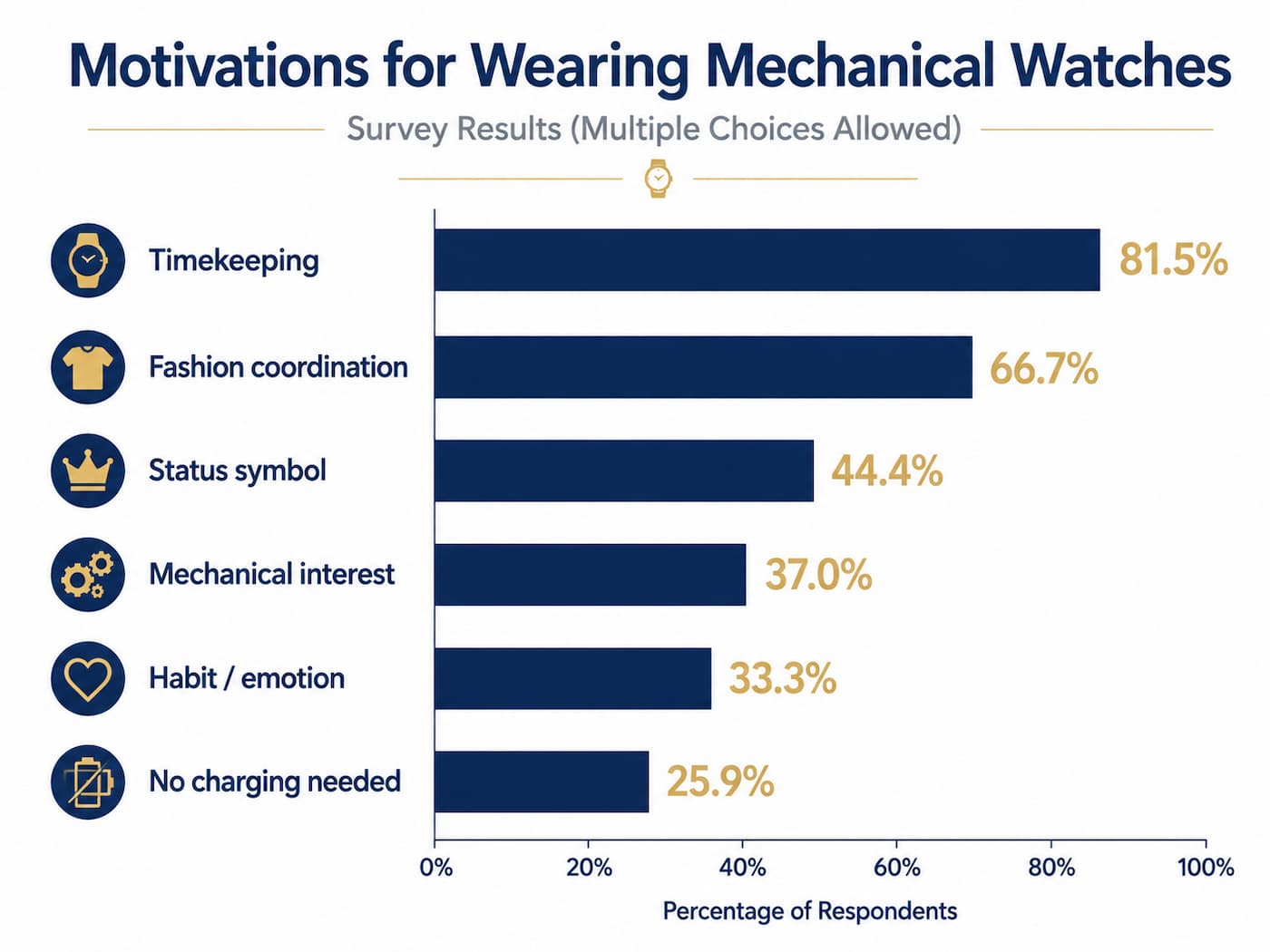
Respondents were allowed to select multiple reasons for wearing mechanical watches. The results are presented below:
| Motivation | Count | Proportion | National Reference |
|---|---|---|---|
| Timekeeping | 22 | 81.5% | 68%–86% |
| Fashion coordination / style statement | 18 | 66.7% | 22%–45.3% |
| Status symbol | 12 | 44.4% | ~10% |
| Interest in mechanical aesthetics | 10 | 37.0% | ~21% (hobby/collection) |
| Habit / emotional attachment | 9 | 33.3% | — |
| No need for charging | 7 | 25.9% | — |
🔍 Key Findings:
Timekeeping remains the primary need (81.5%), though the proportion falls within the lower range of the 68%–86% national interval. This suggests that residents in this community rely slightly less on watches as pure timekeeping tools, while decorative and status-oriented attributes carry greater weight.
Fashion coordination / style statement (66.7%) significantly exceeds the national range of 22%–45.3%. This is closely tied to the occupational composition of the community—civil servants, teachers, and similar professions place high value on “proper” and “refined” attire.
Status symbol (44.4%) is markedly higher than the national average of approximately 10%. When considered alongside the community’s housing price (8,441 RMB/m²) and unit sizes (predominantly 122 m²), it can be inferred that household asset levels in this community are above average within Qujiang District, giving rise to a tendency toward social-signaling consumption.
“No need for charging” was cited by 25.9% of mechanical watch wearers as a key advantage. This “anti-smart” practical reason deserves attention—smartwatches generally require daily or once-every-two-days charging, which represents a notable burden for middle-aged and elderly users.
3.2 Price Segments and Purchasing Power
Among the 27 mechanical watch wearers, the price distribution is as follows:
| Price Range (RMB) | Count | Proportion |
|---|---|---|
| Below 1,000 | 3 | 11.1% |
| 1,000 – 5,000 | 11 | 40.7% |
| 5,000 – 15,000 | 8 | 29.6% |
| Above 15,000 | 5 | 18.5% |
Nationwide survey data indicate that the sub-5,000 RMB segment is the primary price range for male watch purchasers. In Fudongyuan Community, however, mechanical watches priced above 5,000 RMB account for 48.1% —substantially higher than the national average, which aligns with the community’s overall spending capacity. Industry reports note that the 8,000–15,000 RMB segment of traditional mechanical watches experienced a notable decline in national sales, yet within this community sample, this tier still represents nearly 30% of mechanical watches, indicating that premium timepieces maintain a stable audience in middle-class neighborhoods.
3.3 Wearing Frequency and Occasions
Among the 27 mechanical watch wearers:
- Daily wear: 17 individuals (63.0%)
- Weekdays only: 6 individuals (22.2%)
- Formal occasions only: 3 individuals (11.1%)
- Occasional wear: 1 individual (3.7%)
Overall, 85.2% of mechanical watch wearers maintain a frequency of at least 5 days per week, demonstrating that mechanical watches in this group are not “keepsakes tucked away in drawers” but rather everyday essentials.
For practical advice on protecting a mechanical watch during physical activities, see our guide to protecting mechanical watches during sports.
IV. Group Characteristics and Psychological Profile
4.1 Typical Wearer Profile
Based on cross-tabulation analysis, the typical mechanical watch wearer in Fudongyuan Community can be described as:
- Age: 40–55 (accounting for 59.3% of mechanical watch wearers)
- Gender: Predominantly male (77.8%)
- Occupation: Civil servant / public institution employee (37.0%), business management (29.6%), professional/technical roles (22.2%)
- Wearing habit: Has worn mechanical watches for over 5 years (70.4%)
- Ownership: Owns 2 or more watches (55.6%)
A psychological study conducted by the University of Glasgow found that individuals who wear non-smart watches tend to exhibit higher conscientiousness, greater emotional stability, and lower extraversion and openness. The researchers also noted that watch wearers are generally more punctual when keeping appointments. While the present study did not administer personality scales, multiple interviewees made comments such as “wearing a mechanical watch makes me more mindful of time management” and “I dislike the constant message notifications from smartwatches”—echoing the Glasgow findings.
4.2 Primary Reasons for Not Wearing Mechanical Watches
Among the 71 respondents who either do not wear watches regularly or have chosen smart/quartz alternatives, the main reasons for not opting for mechanical watches are:
| Reason | Count | Proportion |
|---|---|---|
| Too expensive | 29 | 40.8% |
| Inconvenient (needs winding, resetting) | 24 | 33.8% |
| Single-function, inferior to smartwatches | 22 | 31.0% |
| Not accustomed to wearing any watch | 18 | 25.4% |
| Maintenance is costly and troublesome | 15 | 21.1% |
Industry analysis likewise points out that traditional mechanical watches demand careful handling—prolonged inactivity causes them to stop, requiring regular winding, and professional servicing every few years costs thousands of RMB, making daily ownership relatively expensive.
V. Emerging Trend: Hybrid “Mechanical Movement + Smart Face” Products
A noteworthy new phenomenon emerged during the survey: among the 27 mechanical watch wearers, 9 individuals (33.3%) expressed interest in or intention to purchase hybrid watches that “retain the mechanical movement while integrating smart monitoring functions.” Additionally, among the 20 smartwatch users, 6 individuals (30.0%) stated that if hybrid products achieve a mechanical-watch appearance indistinguishable from the real thing, they would consider switching.
The defining characteristics of such products are: a self-winding mechanical movement at the base, overlaid with an ultra-thin sensor module capable of monitoring heart rate, blood oxygen, stress, and sleep data—while preserving traditional mechanical watch features such as analog hand display and exhibition caseback. Pricing typically falls in the 10,000–30,000 RMB range, sitting precisely between traditional mid-range mechanical watches and high-end smartwatches.
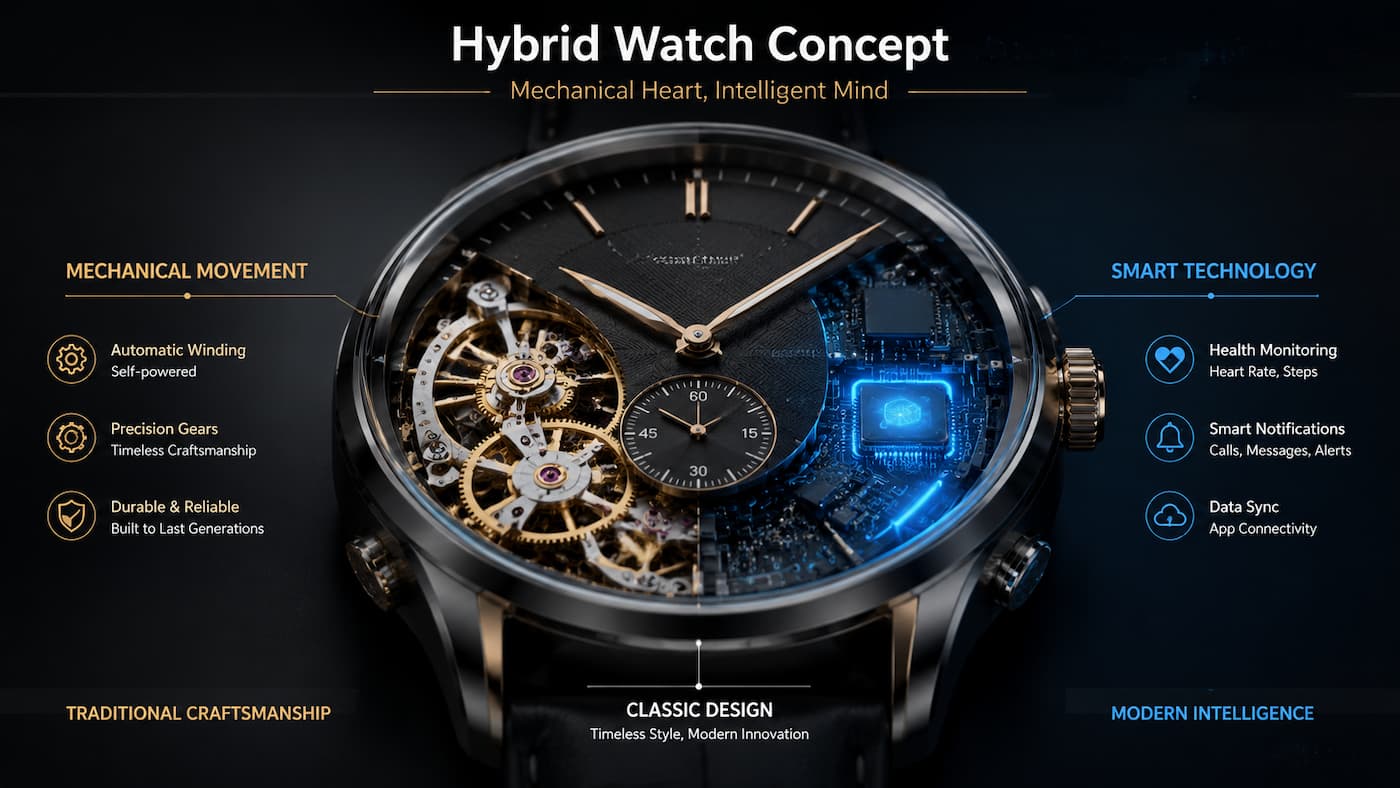
This trend is corroborated by industry data: although mechanical watches still commanded approximately 60% of the market in 2025, growth has noticeably decelerated, and “fusion-style” products are increasingly being viewed by some brands as a new growth avenue.
VI. Comparative Analysis: Fudongyuan vs. National Data
| Indicator | Fudongyuan Community | National Reference | Analysis |
|---|---|---|---|
| Regular watch-wearing rate | 47.8% | 45.1% | Slightly above national average |
| Mechanical as % of watch wearers | 41.5% | ~36%–40% | Slightly higher, consistent with middle-class positioning |
| Smartwatch as % of watch wearers | 30.8% | ~30%–32% | Largely on par |
| “Timekeeping” as primary reason | 81.5% | 68%–86% | Within medium range |
| “Status symbol” as reason | 44.4% | ~10% | Significantly higher |
| Mechanical watches above 5,000 RMB | 48.1% | Dominated by low-to-mid price tiers | Significantly higher |
VII. Conclusion
The phenomenon of mechanical watch wearing in Fudongyuan Community can be summarized in four key points:
By the banks of the Qujiang River, in this quiet community, the ticking of mechanical watches goes on. Only now, within that ticking, the rhythms of the digital age are quietly making themselves heard.
